COLOURFUL RAJASTHAN
India is a land full of diversity, where people from different religions, castes, and communities live together in love and harmony Among the many diverse regions of India, Rajasthan holds a unique and special place. At first glance, when you hear the name “Rajasthan,” an image of sand dunes, barren hills, and water scarcity may come to your mind. Is this really the Rajasthan you have always imagined?
RAJASTHAN : AN ORNAMNET OF INDIA
Let us introduce you to a Rajasthan that perhaps you are still unaware of —
- Rajasthan, whose land has been nurtured more by the blood of its brave sons than by rain, and which has been glorified in the verses of poets.
- The Rajasthan that for centuries prevented foreign invaders from setting foot on Indian soil and preserved India’s unity.
- We speak of the Rajasthan that has never harbored separatist thoughts and has always stood with India in unity.
- We speak of that Rajasthan which gave birth to great rulers and scholars such as Maharana Pratap, Amar Singh, Rana Kumbha, Maharana Raj Singh, Rao Maldeo, Rao Chandrasen, Jaswant Singh, Rao Jodha, Bika, Sawai Jai Singh, Mirza Raja Man Singh, Prithviraj Chauhan, Nag Bhatt, and Vigraharaj IV.
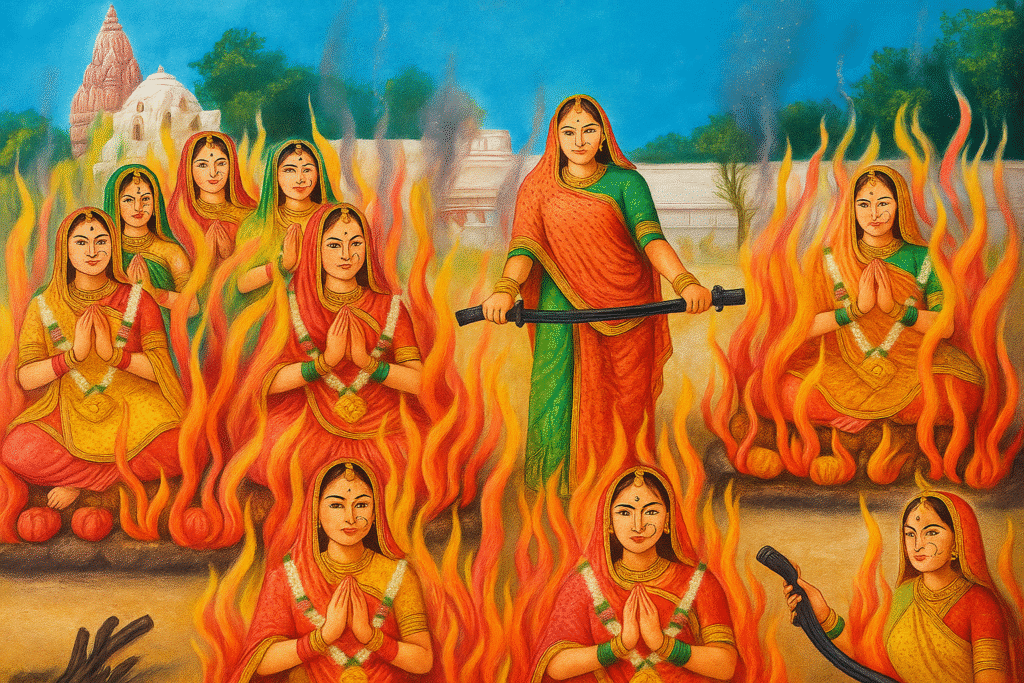
- We speak of the land of Rajasthan where its courageous women chose to sacrifice themselves in the flames of Jauhar rather than surrender to enemy forces. “The flames of Jauhar blazed high, and Chittor shone bright. Queen Padmavati sat in the sacred fire, setting the supreme example of honour.
- We speak of the Rajasthan where women such as Narayani Devi Verma, Anjana Devi Chaudhary, Janki Devi Bajaj, and Savitri Devi Bhati marched shoulder to shoulder with men in the freedom struggle.
- This land belongs to generous souls like Bhamashah, Tarachand, Amarchand Bathiya, Rai Singh, to nurturing mothers like Panna, to brave warriors like Alha and Udal, to the eternal love of Dhola and Marwan, and to the valor of Maharana Pratap.
Some lines perfectly capture this spirit “Poets sing the love tale of Dhola-Marwan, While bards narrate the valor of Alha-Udal.”
- This is the motherland of the Barath family — Kesari Singh Barath, Pratap Singh Barath, and Zorawar Singh Barath — who sacrificed their entire families for the sake of the nation.
- On this land, great saints and folk deities such as Gogaji, Ramdevji, Meha Ji, Pabu Ji, Teja Ji, Jambhoji, and Dadu Dayal dedicated their lives to public welfare and are worshipped today as divine beings.
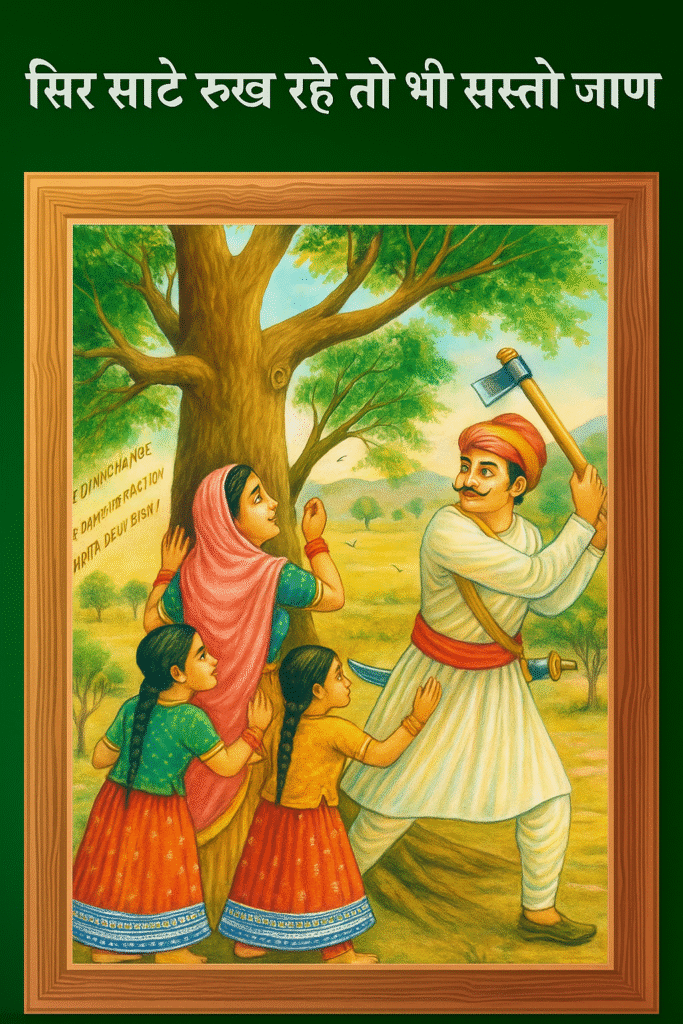
- This sacred land gave birth to poets such as Magha, Udyotan Suri, Dursa Adha, Sadashiva Bhatt, Suryamall Misran, Kanhaiyalal Sethia, Vijaydan Detha, Kavi Kallol, and Bankidas, who made invaluable contributions to both Rajasthani and Hindi literature. In Rajasthan, which has deep love for nature, 363 people along with Amrita Devi sacrificed their lives to protect trees. It is the only place in the world where fairs like the Tree Fair or Khejri Fair are held to celebrate trees..
CULTURE
The vibrant and colorful culture of Rajasthan justifies its title “COLOURFUL RAJASTHAN” (rangilo Rajasthan). The northeastern parts show a mix of the food, language, and culture of Haryana and Punjab, the east shows the influence of Uttar Pradesh’s Braj and Awadhi languages, the southeast reflects the influence of Madhya Pradesh, and the southwest carries traces of Gujarat — all of which give Rajasthan its unique cultural identity
LANGUAGE
Languages such as Marwari, Dhundhari, Wagdi, Ahirwati, Malvi, and Shekhawati are spoken here.
CUISINE
Rajasthan’s Dal Baati Churma is famous throughout India and abroad. Other famous dishes include Marwar’s Sangri, Shekhawati’s Ker Sangri, Kota’s Pyaz Kachori, Jodhpur’s Mawa Kachori, Alwar’s Kalakand, and Bikaner’s Bhujia.
MUSIC
Rajasthan has greatly contributed to Indian classical music in styles such as Dhrupad, Khayal, and gharanas like Jaipur, Patiala, Rangila, and Delhi. Jaipur Gharana represents the Hindu style of Kathak dance.
DANCE
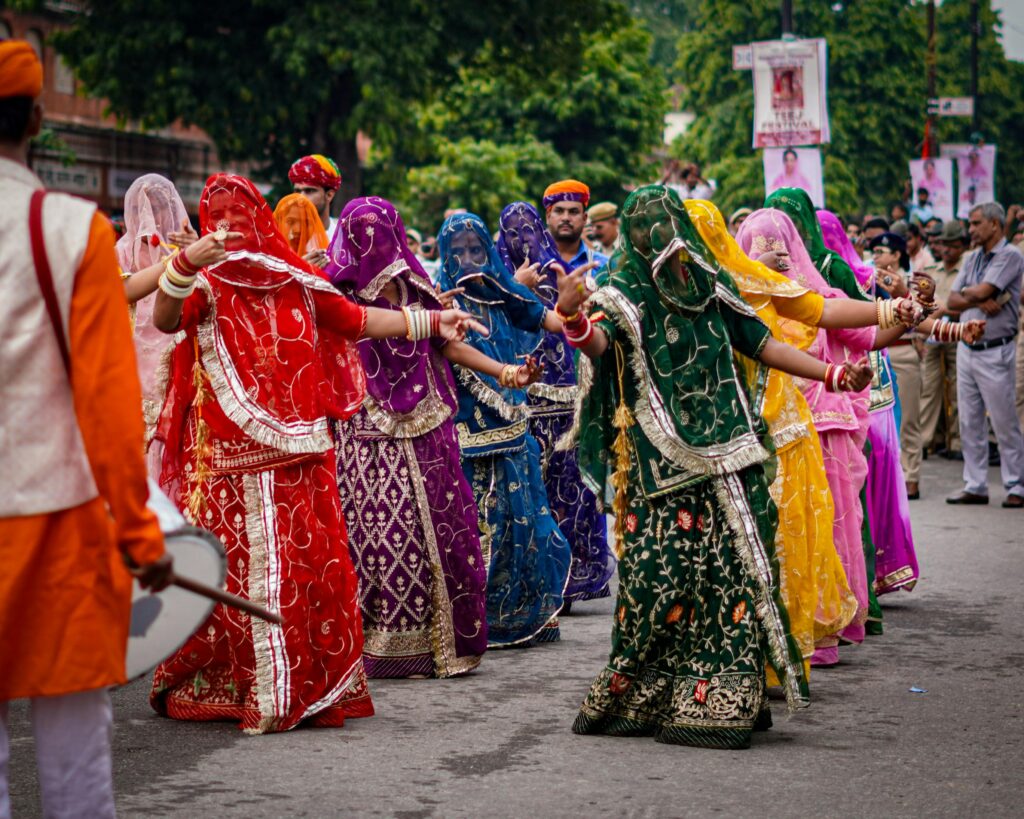
Rajasthan’s most popular folk dance is Ghoomar. Other famous dances include Gair Dance, Fire Dance, Kalbeliya Dance (which UNESCO listed as an Intangible Cultural Heritage in 2010), Bhavai Dance, and Chari Dance — all of which are known both in India and abroad.
TRADITIONAL ATTIRE
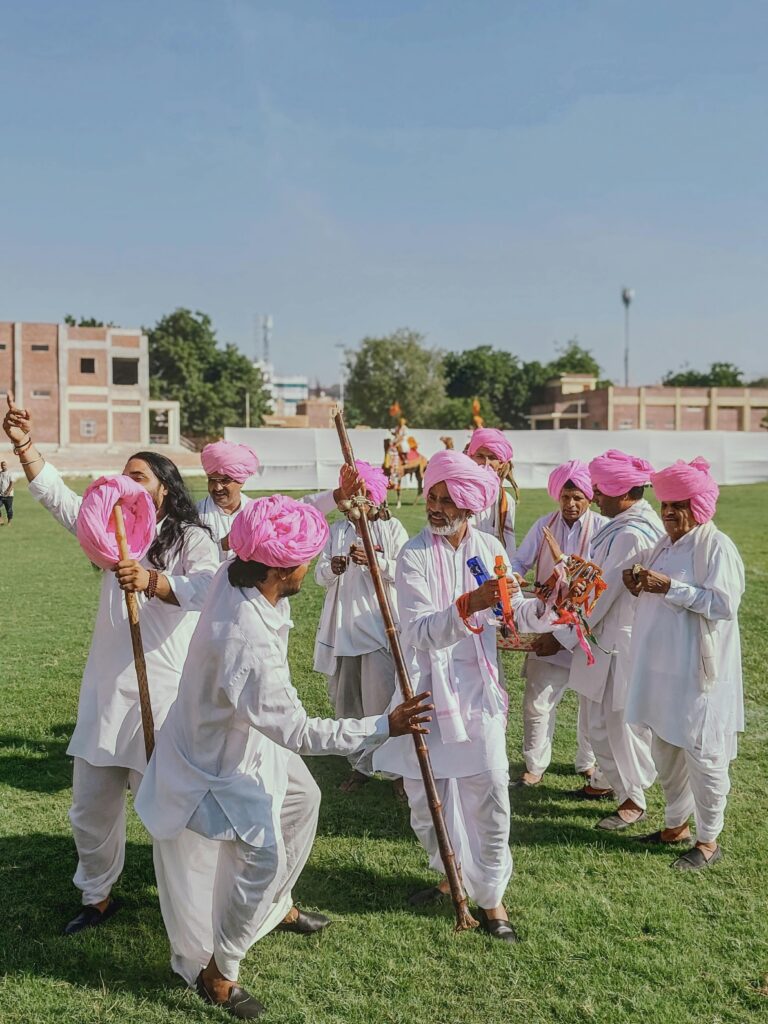
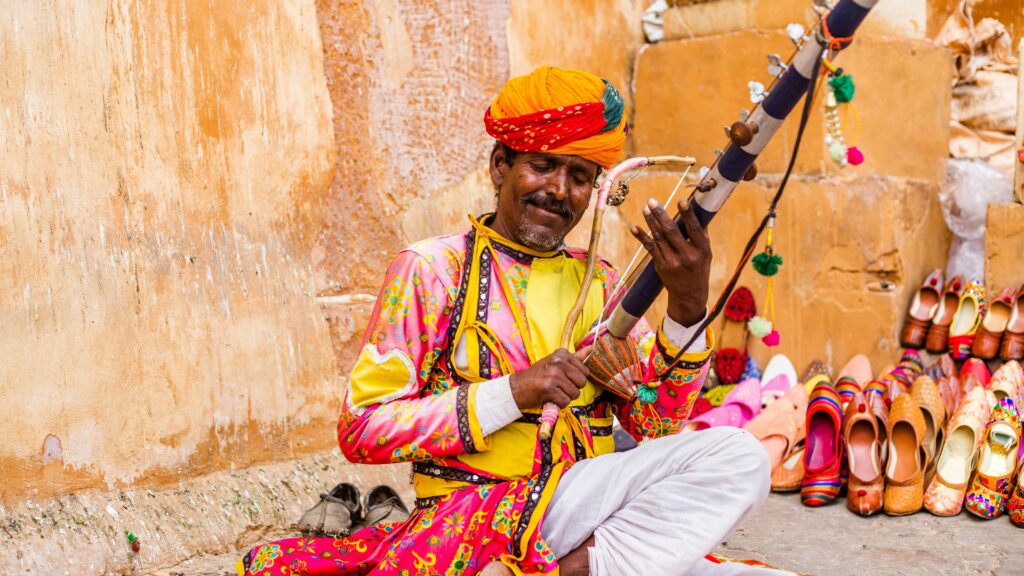
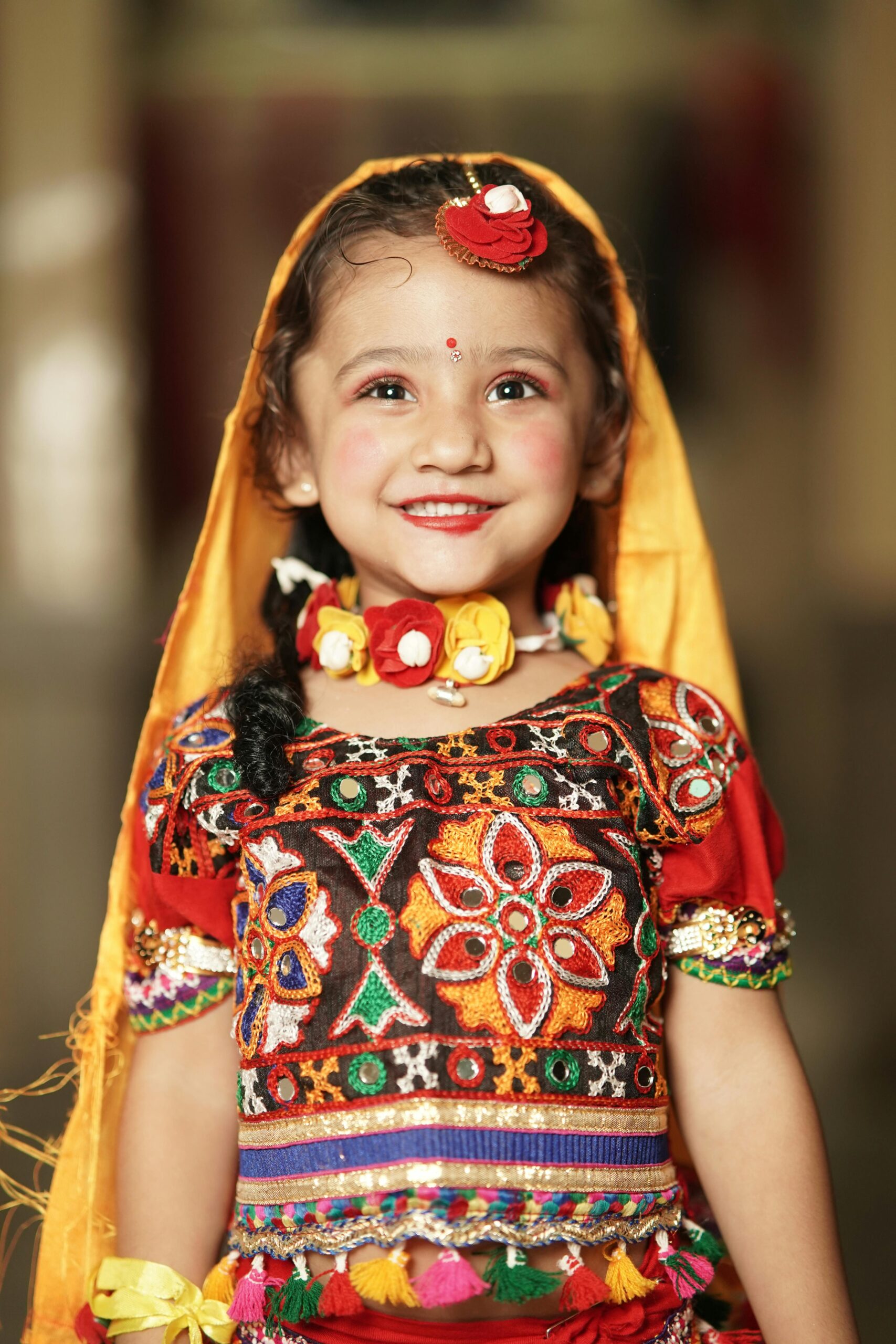
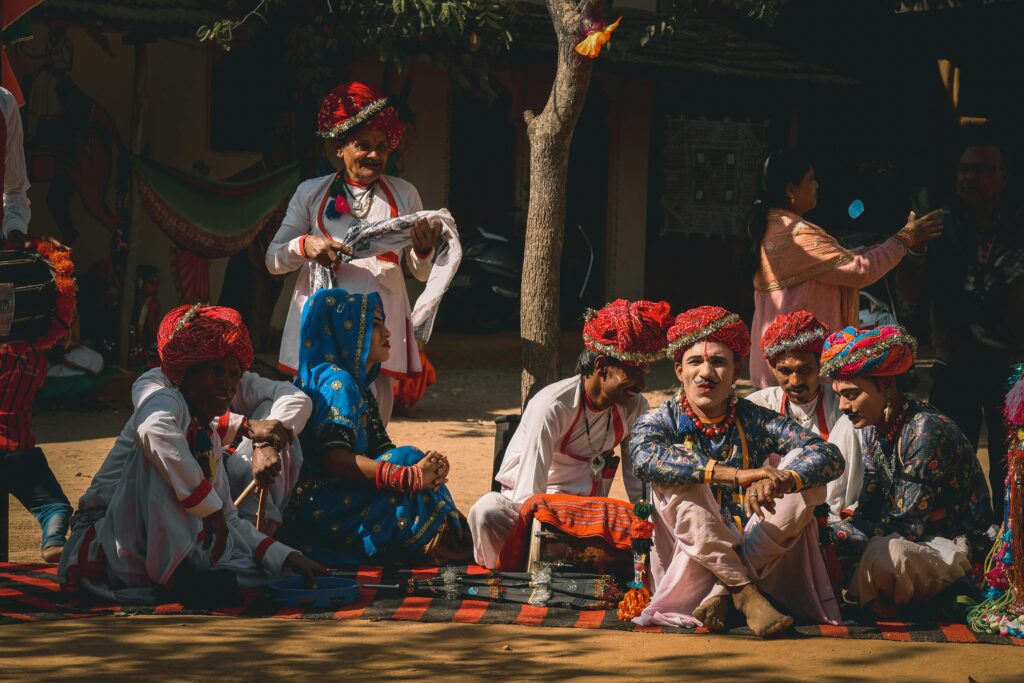
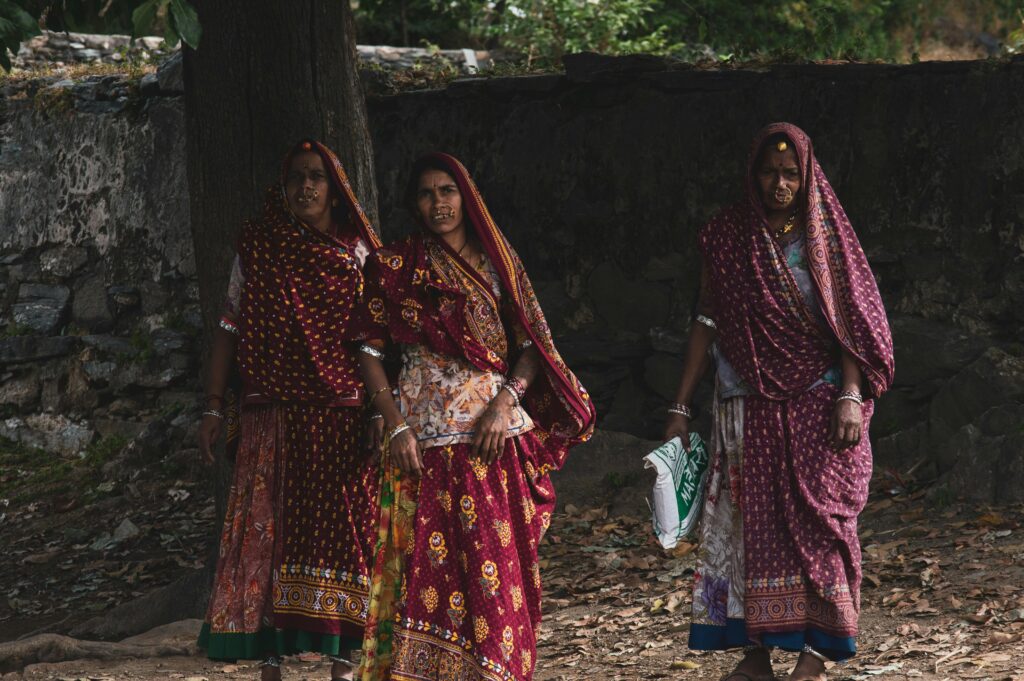
Rajasthani attire features deep and vibrant colors which depict colourful Rajasthan. Women wear Leheriya sarees, and men wear multicoloured safas or turbans. Women prefer bright and rich colors such as red, pink, and yellow. Traditional women’s attire includes Ghaghra-Lugdi, Pomcha, Odhani with Jawar-Bhant and Tarabhant designs, Kachhavu (worn by tribal women), and Chunri cloth.Men wear dhoti-kurta, Angrakha, Angochha, Achkan, and turbans.
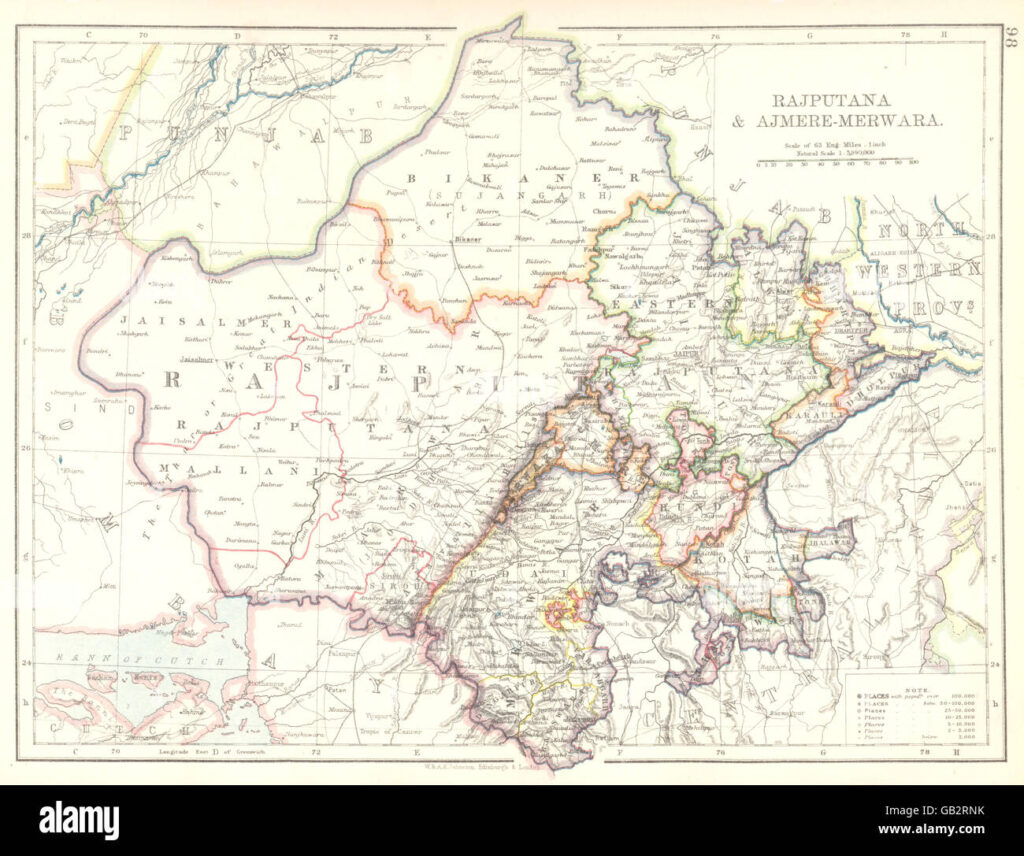
Rajasthan is not just called “colourful Rajasthan or Rangilo Rajasthan ” because of its name — it embodies every quality that makes it colourful and unique. For this land of sands, a poet has rightly said: ” Blessed by divine virtues and the sages’ grace, The desert land shines like a beautiful jewel on Earth.”
PICTURES WHICH ARE DEPICTING COLOURFUL RAJASTHANI CULTURE